Is Your Wall Fungus Ruining the Festive Look? How to Fix It Properly
Wall fungus can ruin your festive look, but you can fix it properly. Find and stop the moisture source, clean the fungus off, let the wall dry fully, repair and prime, th
Summarize With AI
Get a quick summary from your favorite AI model
Table of Content
- 1. What Is Wall Fungus, and Why Does It Show Up Now?
- 2. Common Causes of Damp Walls
- 3. Is Wall Fungus Only Ugly, or Is It a Health Issue?
- 4. Why Painting Over Fungus Fails
- 5. How to Remove Fungus from Wall: Step by Step
- 6. Step 1: Find and Fix the Water Source
- 7. Step 2: Protect Yourself
- 8. Step 3: Clean the Surface
- 9. Step 4: Let the Wall Dry Fully
- 10. Step 5: Repair, Prime and Repaint
- 11. Wall Dampness Treatment, Seepage Treatment and Damp Proofing: What Is the Difference?
- 12. Anti-Fungal Paint and Anti-Fungal Treatment for Walls
- 13. Wall Painting Before Tihar: A Realistic Plan
- 14. When to Call a Professional
- 15. What a Proper Inspection Looks Like
- 16. Meet ConstructionSewa: Trusted Construction Help Across Nepal
- 17. Ready for a Fungus-Free Tihar? Here Is Your Next Step
Wall fungus can ruin your festive look, but you can fix it properly. Find and stop the moisture source, clean the fungus off, let the wall dry fully, repair and prime, then repaint. Small patches are often a DIY job. For large or recurring ones, ConstructionSewa offers a free site visit and a written estimate across Nepal.
What Is Wall Fungus, and Why Does It Show Up Now?
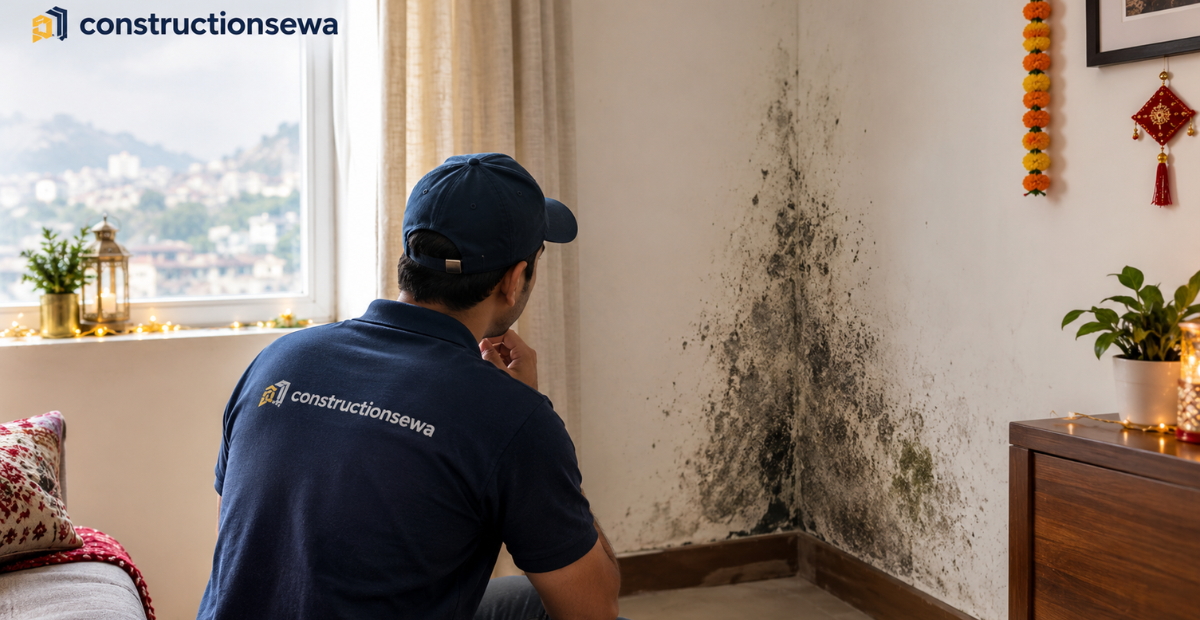
Wall fungus is mould by another name. The World Health Organisation (WHO) explains that hundreds of species of bacteria and fungi, especially filamentous fungi (mould), grow indoors when enough moisture is available. American guides call it mould on a wall, but it is the same thing.
See the pattern? No moisture, no mould. That is why you rarely find it on a dry, sunny wall and often find it in corners, behind wardrobes and around bathrooms.
Walls that soaked up water through the monsoon can stay damp long after the rain stops. Add closed windows and a round of festival mopping, and you have given the fungus a comfortable home.
Common Causes of Damp Walls
Oregon State University’s National Pesticide Information Centre advises fixing leaky pipes, roofs, and gaps around doors and windows. Those are the usual suspects, along with a few more:
-
Leaking pipes inside or behind walls
-
Roof leaks and cracks in outer walls, which let rain seep through
-
Gaps around doors and window frames
-
Poor airflow. WHO guidance says air should move through rooms and stagnant zones should be avoided.
-
Bathrooms and kitchens with little ventilation
The pattern behind a stubborn patch often points to wall seepage, which needs its own fix. More on that below.
Is Wall Fungus Only Ugly, or Is It a Health Issue?
Both, sadly. WHO’s review of the scientific evidence found that dampness and mould in buildings link to more respiratory symptoms, allergies and asthma.
That does not mean one patch will make your family ill. It does mean you should not shrug it off, especially if someone at home has asthma or allergies. If anyone has symptoms, talk to a doctor.
Why Painting Over Fungus Fails
Painting is tempting. Fresh colour, one afternoon, problem gone. Except it is not.
The EPA’s homeowner guide says mould spores will not grow without moisture. It also says that if you clean up the mould and skip the water problem, the mould will most likely return. The same guidance points out that there is no practical way to remove every mould spore from indoor spaces. So the goal is not a sterile wall. The goal is a dry one.
Oregon State’s NPIC gives a simple rule: clean up the mould and dry the area before painting or caulking.
Think of paint over a damp wall as a plaster on a leaking pipe. The plaster looks neat. The pipe keeps leaking. That is why wall fungus treatment always starts with the source of the moisture.
How to Remove Fungus from Wall: Step by Step
The EPA treats small patches (roughly 10 square feet, or a 3 by 3 foot area) as a job most homeowners can handle by following its guidelines. Bigger areas, or moisture you cannot trace, call for help.
Here is how to remove fungus from a wall when the patch is small.
Step 1: Find and Fix the Water Source
Before you touch the fungus, hunt down the moisture. Check pipes, the roof, outer wall cracks and window frames. Fix the leak first.
This step decides everything. If the water keeps coming, the fungus keeps coming too.
Step 2: Protect Yourself
Wear gloves, eye protection and a mask, and open the windows. The EPA guide lists the exact protective gear for different jobs. Keep children and pets out of the room while you work.
Step 3: Clean the Surface
Scrub hard surfaces with detergent and water, then dry them completely. This is how to remove mold from a wall without turning the room into a chemistry lab.
Do not obsess over sterilising. The EPA notes that in most cases it is neither possible nor desirable to sterilise an area. A background level of spores stays, and those spores do not grow on a dry wall.
Step 4: Let the Wall Dry Fully
Be patient. Open windows, let air move and give the wall time. A wall that still feels cool or damp is not ready for paint.
Step 5: Repair, Prime and Repaint
Fill cracks, prime the surface, then paint. If the plaster feels soft or crumbles, stop and call a professional. That damage usually runs deeper than the surface.
Wall Dampness Treatment, Seepage Treatment and Damp Proofing: What Is the Difference?
Contractors use these terms loosely, so here is a plain-English guide.
|
Term |
What it targets |
The question it answers |
|
Wall dampness treatment |
Moisture already in the wall and on its surface |
Why is my wall wet and stained? |
|
Wall seepage treatment |
Water entering from outside or from a pipe leak |
Where is the water coming from? |
|
Damp proofing |
Barriers and details that keep moisture out |
How do I stop it from coming back? |
In practice, a good inspection decides which one, or which mix, your wall needs. That is why a quote without a site visit deserves a raised eyebrow. If you want professional damp wall treatment in Nepal, start with an inspection.
Anti-Fungal Paint and Anti-Fungal Treatment for Walls
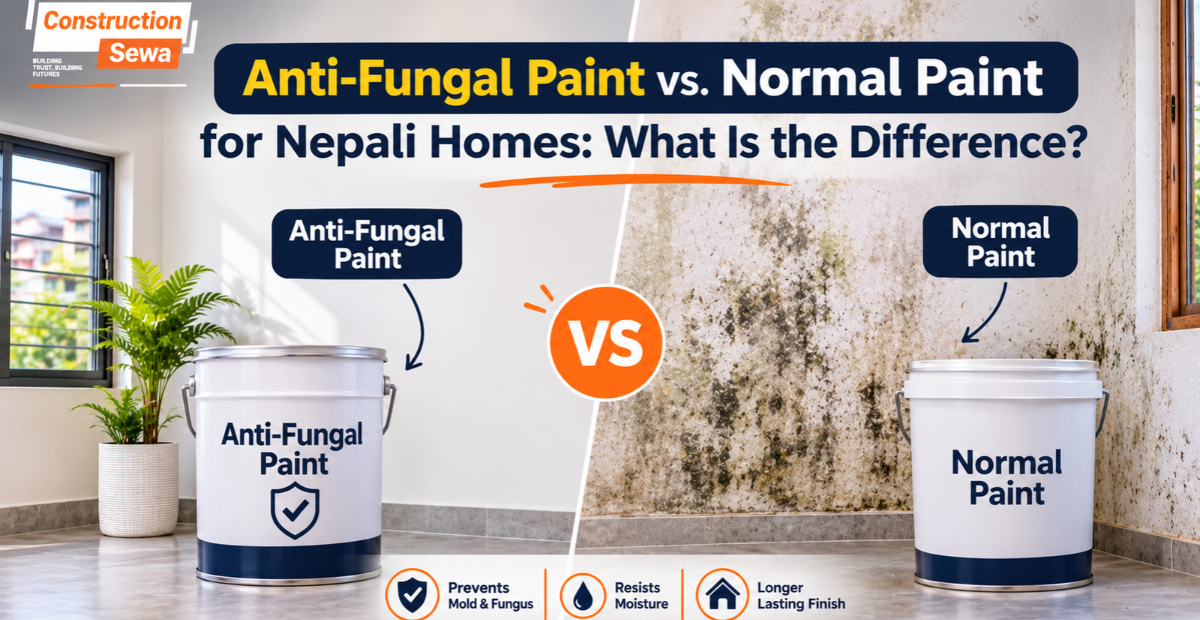
Anti-fungal paint is made to resist fungal growth on the painted surface. That is useful. It cannot, however, stop water from getting into the wall.
Use it as the last layer, after you find the source, clean, dry and repair. Products differ, so read the label and ask your contractor which system suits your wall. A professional anti-fungal treatment for walls usually combines this final layer with the groundwork underneath.
If the damp comes from a bathroom, the long-term answer may involve the plumbing and fittings, not only the wall. A bathroom renovation can solve the cause instead of the symptom.
Outside walls matter too. Cracks in the outer wall let rain in, and the stain then shows up indoors. Have the cracks repaired before any exterior painting.
Wall Painting Before Tihar: A Realistic Plan
Laxmi Puja is near, so here is the order of work that makes sense:
-
Book an inspection now.
-
Fix the moisture source.
-
Let the wall dry. Ask your contractor how long your wall needs.
-
Treat and prime the surface.
-
Paint.
If the job cannot finish in time, do not paint over a wet wall. Treat what you can and schedule the rest after the festival. A repair done properly in the second week of November beats a shortcut that returns in December.
Once the wall is ready, wall painting before Tihar can turn a problem corner into a highlight. Want something bolder than plain emulsion? A texture or decorative finish can make the wall the star of the room.
Fresh walls also look better beside polished wood. If your doors and windows look tired, the wood polishing service covers them.
Meanwhile, diyos and marigold garlands are great at drawing attention. They are not great at hiding a damp wall.
When to Call a Professional
Call a professional when:
-
The patch is bigger than about 10 square feet
-
Fungus comes back after you clean it
-
You cannot find where the water comes from
-
The plaster is soft, flaking or crumbling
-
Someone at home has asthma or allergies
What a Proper Inspection Looks Like
A proper inspection answers one question before anything else: where is the water coming from? A thorough inspector checks:
-
The affected area: its size, how far the fungus spreads, and whether the plaster is firm or soft
-
Likely moisture sources: pipes, the roof, cracks in outer walls, and gaps around doors and windows
-
Airflow: whether the room has proper ventilation, since WHO guidance says to avoid stagnant air zones
-
The walls and rooms nearby, in case the patch you see is only part of the problem
At ConstructionSewa, the process is simple. You book a site visit online or by phone. A contractor inspects the wall and shares a written estimate. Work then follows a schedule with milestone-based payments, and it ends with a quality check and handover.
You should leave the inspection with clear answers in writing. The estimate covers labour, materials where applicable and the timeline before work begins. Your contractor also explains the expected duration, since timelines depend on project size, weather and material availability. Workmanship warranty terms depend on the scope and come in your project agreement after the inspection.
Ask three questions during the visit: Where is the water coming from? What gets fixed first? How long does the wall need to dry before painting? A contractor who answers these clearly is a good sign.
Meet ConstructionSewa: Trusted Construction Help Across Nepal
ConstructionSewa is a construction and renovation service serving homes across Nepal. The team connects homeowners with verified professionals and keeps the process transparent, from the first site visit to the final handover.
Painting is only one part of what ConstructionSewa covers. The service list also includes new house construction, building extensions, boundary and retaining walls, earthquake retrofitting, and kitchen and bathroom renovation. That range matters when a damp wall turns out to be a plumbing or structural question.
You can read more about ConstructionSewa or browse the projects page. The office is in Imadole, Lalitpur, and the team is available Monday to Sunday, 8:00 AM to 8:00 PM. Outside Kathmandu? Share your location when you book, and ConstructionSewa matches local contractors.
Ready for a Fungus-Free Tihar? Here Is Your Next Step
Fungus on a wall is a moisture problem wearing a dark, fuzzy disguise. Fix the water, clean the surface, let the wall dry, then paint. Skip a step, and the patch tends to return, usually right before the next festival.
Here is the short version to keep handy:
-
Find and fix the water source.
-
Clean the surface and let the wall dry fully.
-
Repair cracks and prime.
-
Paint, ideally with an anti-fungal finish as the last layer.
-
Keep rooms ventilated so moisture does not settle again.
With Laxmi Puja, the order of work matters more than speed. A rushed coat over a damp wall costs you twice: once now, and again when it peels.
Not sure whether your patch is a quick clean or a deeper problem? That is exactly what a site visit settles. You do not need to guess, and you do not need to commit before you know the scope.
Ready to start? Book a free site visit with ConstructionSewa and get a written estimate after the inspection. You can also call or WhatsApp +977-9716693969. The team works Monday to Sunday, 8:00 AM to 8:00 PM, from Imadole, Lalitpur, and serves homes across Nepal.
Let the diyos do the glowing. Your walls just need to stay dry.
Frequently asked questions
Community
Likes and comments
Like the post if it helped you, and leave a comment to share your experience. Every comment is reviewed by our admin team before it appears publicly.
Want to join the conversation?
Sign in to leave a comment. Every comment is reviewed by our admin team before it becomes public.
Log in to commentApproved comments
Showing the latest approved conversation for this post.
No approved comments yet
Be the first to start a conversation once your comment is approved.