Anti-Fungal Paint vs. Normal Paint for Nepali Homes: What Is the Difference?
Not sure whether antifungal paint is worth the extra money? This guide compares it with normal paint, shows which rooms and walls need it, and explains what to ask your dealer. It also covers wall preparation and why you should fix any leak before the first coat.
Summarize With AI
Get a quick summary from your favorite AI model
Table of Content
- 1. Anti-fungal paint vs normal paint: the main differences
- 2. What is the difference between emulsion and anti-fungal emulsion?
- 3. What is normal paint?
- 4. What is anti-fungal paint and how does it work?
- 5. What do brands promise?
- 6. How do you check the claim?
- 7. Which rooms and walls need anti-fungal paint?
- 8. Why do painted walls get black spots in the monsoon?
- 9. One thing to settle before you paint: Is the wall dry?
- 10. Is anti-fungal paint worth it?
- 11. Anti-fungal paint price in Nepal: how to compare without guessing
- 12. What to ask your paint dealer before you buy
- 13. How to prepare the wall for a long-lasting paint job
- 14. What is the best paint for damp walls in Nepal?
- 15. Choosing a painter for your home
- 16. Related painting and wall services
- 17. Pick the Right Paint, Then Protect It From the Monsoon
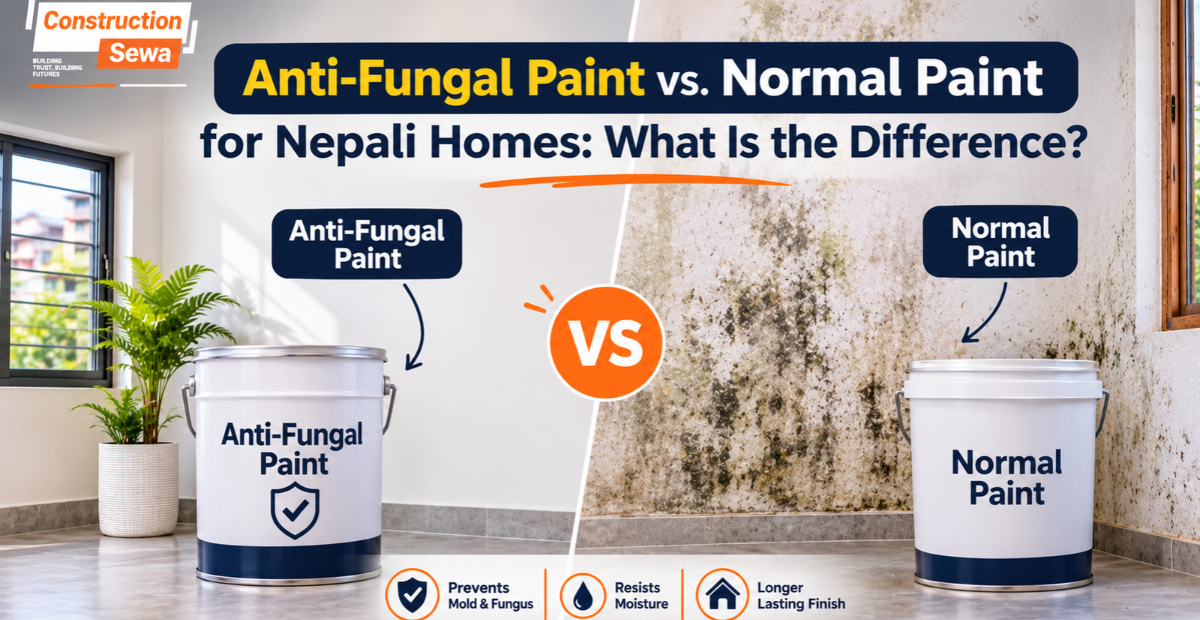
Anti-fungal paint has extra ingredients that resist fungus on the painted surface. Normal paint doesn't promise this. Anti-fungal paint is worth choosing for humid rooms and walls that get little sun or air. But it can't fix a wall that is wet, so repair any leak before you paint.
Anti-fungal paint vs normal paint: the main differences
Here is the quick comparison first. The details come after.
|
Factor |
Normal paint |
Anti-fungal paint |
|
Main job |
Colour and finish |
Colour, finish and fungus resistance on the paint surface |
|
Fungus claim on label |
Usually none |
Yes, on selected products |
|
Stops water coming through the wall |
No |
No |
|
Best for |
Dry rooms with good airflow |
Humid rooms, walls near wet areas, rooms with little sun or air |
|
Price |
Lower |
Higher, depends on brand, product and dealer |
|
Preparation needed |
Clean, dry, sound wall |
Same, plus fixing any moisture problem first |
What is the difference between emulsion and anti-fungal emulsion?
An anti-fungal emulsion is still an emulsion. You apply it the same way, and it looks and washes the same way. The only difference is the extra fungus resistance on the paint surface.
What is normal paint?
Normal paint is the usual emulsion most of us use. It gives colour, finish and a surface you can wipe. Many normal emulsions don't make any claim about fungus on the label.
Is that bad? No. In a dry room with good air, normal paint works fine for years. A bedroom that gets morning sun and fresh air doesn't need to pay extra for a fungus claim. What matters more is clean surface preparation and a careful finish, which is the core of good interior wall painting.
What is anti-fungal paint and how does it work?
Anti-fungal paint is paint with added ingredients that resist fungal growth on the dry paint surface. Notice the words "on the surface". It protects the paint film. It doesn't protect the wall behind the paint from water.
What do brands promise?
Brands use different words, and the claim often depends on the product. For example, Asian Paints says its Royale Luxury Emulsion is designed to prevent fungal growth on painted surfaces, and it names the test used: ASTM D 5590. Other brands sold in Nepal make similar claims on some products.
How do you check the claim?
ASTM D 5590 is a lab test. A lab result is a good sign, but a lab is not your bathroom wall in August. So ask which exact product carries the claim, and which test supports it. Then read the technical data sheet, not only the tin.
Which rooms and walls need anti-fungal paint?
You don't need to paint the whole house with it. Choose by room.
-
Worth considering: walls near bathrooms and kitchens, rooms with little sun or air, ground floor rooms that stay humid, and any wall where mould has returned before
-
Normal paint is usually fine: dry, airy bedrooms and living rooms with no history of black spots
-
Outside walls: these take rain, sun and dust, so use a paint made for exterior use. Check the data sheet to see whether it also carries a fungus claim, and read up on exterior painting before you choose
That's the smart way to spend your paint budget. Put the better paint where the risk is.
Why do painted walls get black spots in the monsoon?
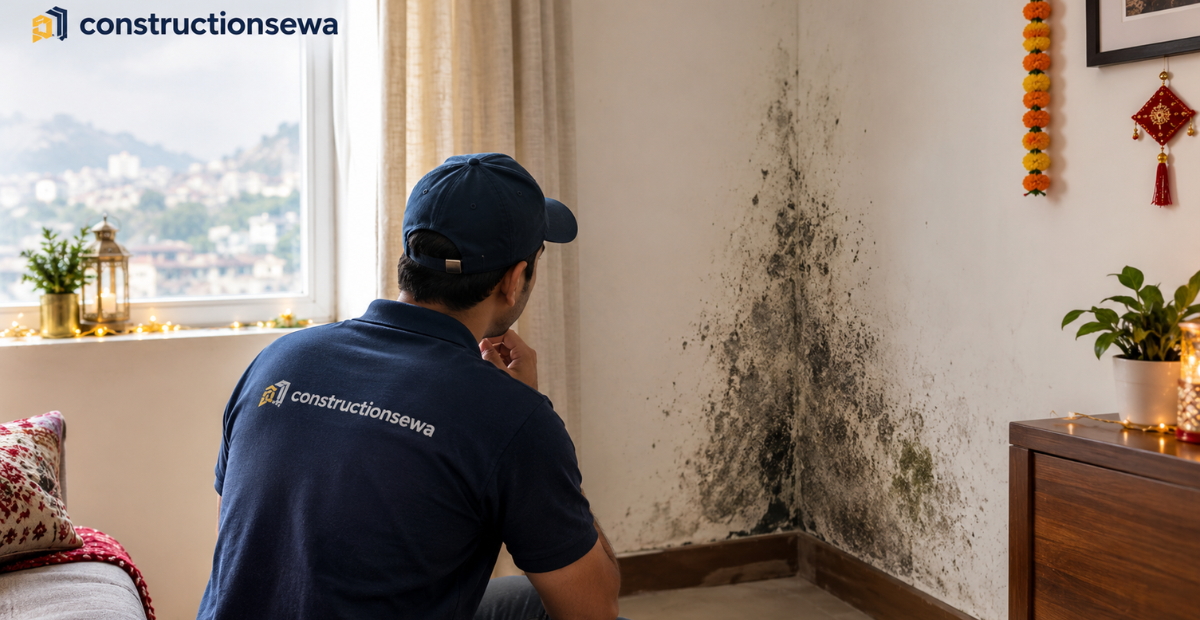
Those black or green patches are mould, a type of fungus. The US Environmental Protection Agency (EPA) says no mould can grow without water or moisture.
Nepal's monsoon normally runs from 13 June to 2 October, according to the Department of Hydrology and Meteorology (DHM). In 2025, it left eastern Nepal on 10 October, eight days late. The Kathmandu Post reports that the monsoon brings around 80 per cent of Nepal's yearly rain.
That's months of humid air and wet outer walls. It's also why a nice paint job can start showing spots by August.
One thing to settle before you paint: Is the wall dry?
This is the part paint labels skip. Paint, even anti-fungal paint, can't dry a wet wall.
The EPA says the key to mould control is moisture control. It also says paint put over mouldy surfaces is likely to peel. So if you see active leaks, wet patches or peeling, fix the cause first and let the wall dry.
Common causes include a leaking pipe that needs plumbing repair, rain coming through a roof or terrace that needs waterproofing, cracks in an outer wall, or moisture rising from the ground.
If mould has already appeared, our guide on how to remove wall fungus and treat it properly walks you through the cleaning step by step.
Is anti-fungal paint worth it?
Sometimes yes, sometimes no.
It's worth the money when:
-
The wall is dry, and any leak or seepage is already fixed
-
The room stays humid, with little sun and little airflow
-
Mould came back in the same place before
-
You're repainting after proper cleaning and repair
You can save your money when:
-
The wall is still wet or leaking
-
The room is dry and airy, and has never had mould
-
You hope the paint alone will cure a damp problem
In a dry room, normal paint plus open windows is an honest and perfectly good choice.
Anti-fungal paint price in Nepal: how to compare without guessing
There's no one fixed price. Anti-fungal paint prices in Nepal vary by brand, product, finish, pack size, and dealer, and they change over time. A number printed in an article can become old quickly, so ask your dealer for today's rate.
What you can do is compare smartly:
-
Check the price per litre and the coverage per litre on the data sheet.
-
Multiply by the number of coats the product needs.
-
Add primer, putty, labour and any repair work.
A cheap tin that needs three coats can cost more than a pricier tin that needs two. Do the sum before you decide.
What to ask your paint dealer before you buy
You don't need to be a paint expert. Just ask these questions and write down the answers.
-
Which exact product has the anti-fungal claim? Ask for the full product name, not just the brand.
-
Which test supports the claim, and can I see the data sheet?
-
How much area does one litre cover, and how many coats do I need?
-
Do I need a special primer? Which one?
-
Is this made for inside walls, outside walls or both?
-
What does the warranty or guarantee cover, and what does it not cover? Ask for it in writing.
One more point. "Waterproof paint for walls" and anti-fungal paint are different things. Waterproof coatings deal with water getting into the wall. Anti-fungal paint deals with growth on the surface. Check each data sheet to see where it can be used.
How to prepare the wall for a long-lasting paint job
Good paint on a badly prepared wall still fails. Here's the short version.
-
Make sure the wall is dry: Fix leaks and seepage first.
-
Clean any mould: The EPA suggests scrubbing hard surfaces with detergent and water, then drying completely. Wear an N-95 mask. If mould covers more than about 10 square feet, call a professional.
-
Repair the surface: Scrape off loose paint and fix broken plaster.
-
Prime if the product asks for it: Use an anti-fungal primer for walls only if the data sheet recommends it.
-
Apply the recommended coats: Don't rush the drying time between them.
Repainting before a festival? Our house painting before Tihar checklist covers cost, colours and preparation.
What is the best paint for damp walls in Nepal?
Honestly, there's no magic paint. The best result comes from a dry wall, good preparation and the right paint for the job.
-
Humid but dry, sound walls: anti-fungal emulsion is a sensible choice.
-
Outer walls facing rain: a paint made for exterior use, after cracks are repaired.
-
Roofs and terraces: terrace waterproofing first, then paint.
-
Wet bathroom walls: fix the plumbing and bathroom waterproofing before any finish.
Choosing a painter for your home
A good paint job needs a good hand. If you search for a painter for damp wall repair near me, an anti-fungal treatment service in Kathmandu, or wall damp treatment in Lalitpur, use this checklist before you hire:
-
Ask for a site visit before the quote.
-
Ask for the brand, product name and number of coats in writing.
-
Ask whether any repair work is listed separately from the painting.
-
Ask what happens if patches or peeling appear later.
ConstructionSewa can help. You can find interior wall painting, exterior painting and anti-fungal and damp treatment for stubborn mould there. Tell them what you’re seeing, and book a site visit so someone can check the wall before the first coat goes on.
Related painting and wall services
-
Interior wall painting for bedrooms, living rooms and kitchens
-
Exterior painting for outer walls that take the monsoon beating
-
Texture and decorative paint for feature walls and special finishes
-
Anti-Fungal & Damp Treatment when mould keeps coming back
-
Roofing and waterproofing when rain finds its way through the roof or terrace
-
Bathroom waterproofing when walls near wet areas keep getting patchy
Pick the Right Paint, Then Protect It From the Monsoon
So, which one should you buy? It comes down to where the paint goes.
Anti-fungal paint resists fungus on the surface, so it suits humid rooms and walls near bathrooms and kitchens. Normal paint is fine for dry, airy rooms. Neither can dry a wet wall, so check for leaks and let the wall dry before the first coat.
Spend your paint budget where the risk is. Ask your dealer for the product name, test method, coverage and warranty in writing. Then ask your painter for the brand and number of coats before work begins.
Planning a repaint before the next monsoon? You can book a site visit with ConstructionSewa and have someone look at your walls first. If mould keeps coming back in the same spot, our anti-fungal and damp treatment service is the place to start.
Frequently asked questions
Community
Likes and comments
Like the post if it helped you, and leave a comment to share your experience. Every comment is reviewed by our admin team before it appears publicly.
Want to join the conversation?
Sign in to leave a comment. Every comment is reviewed by our admin team before it becomes public.
Log in to commentApproved comments
Showing the latest approved conversation for this post.
No approved comments yet
Be the first to start a conversation once your comment is approved.