House Construction Cost in Nepal 2026: Price, Materials & Labour
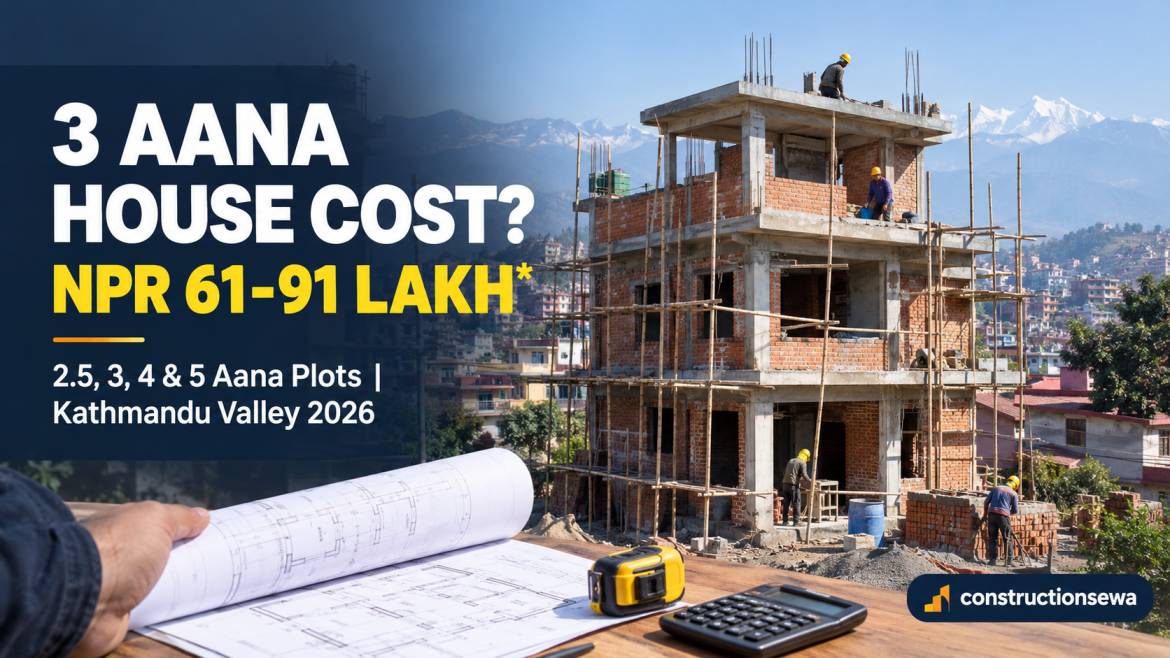
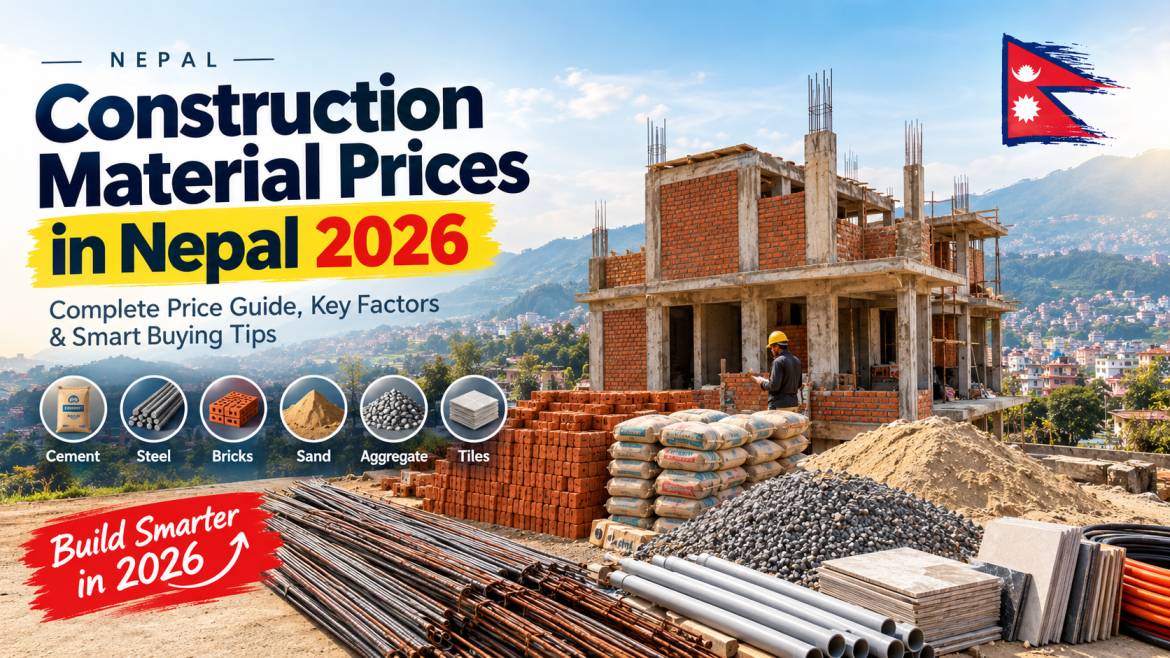
Planning to build a house in Nepal in 2026? This guide covers current house construction costs in Nepal per sq ft, including cement, steel, brick, sand, aggregate, labour, finishing, permits, and design fees. See estimated costs by house size, understand the key factors that affect your budget, and learn how to use a BOQ to plan your construction more accurately.
Summarize With AI
Get a quick summary from your favorite AI model
Table of Content
- 1. Per Sq Ft Construction Cost in Nepal (2026 Rates)
- 2. What's Included vs Excluded in a Per-Sq-Ft Quote
- 3. Total Construction Cost by House Size (Sample Estimates)
- 4. What Is the Total Cost of a 2.5-Storey House in Kathmandu Today?
- 5. RCC Rate Per Sq Ft With Material (Structural Cost)
- 6. What Is the Construction Rate Per Square Foot in Nepal in 2026?
- 7. Construction Material Prices in Nepal 2026
- 8. Cement Price in Nepal 2026
- 9. TMT Steel / Rebar Price Per Kg
- 10. Brick, Sand & Aggregate Prices
- 11. Is It Cheaper to Use Bricks or Blocks for Construction in Nepal?
- 12. Plaster & Finishing Rates in Nepal
- 13. Which Flooring Is Most Cost-Effective for Nepali Homes?
- 14. Price of Granite Per Square Foot in Nepal
- 15. Cost of UPVC Windows Per Square Foot in Nepal
- 16. Labour Cost for House Construction in Nepal 2026
- 17. Daily Wage for Skilled vs Unskilled Construction Labour in Nepal
- 18. Plumbing and Electrical Labour Charges in Nepal
- 19. How Much Do Painters Charge Per Square Foot in Nepal?
- 20. Permits, Design & Hidden Costs
- 21. How Much Does Map Sanction (Naksha Pass) Cost in Nepal?
- 22. How Much Do Architects Charge for House Design in Nepal?
- 23. What Are the Hidden Taxes When Building a House in Nepal?
- 24. How to Calculate Your House Construction Cost in Nepal
- 25. How to Build a Small House in Nepal on a 50 Lakh Budget
- 26. Turning This Estimate Into an Actual Budget
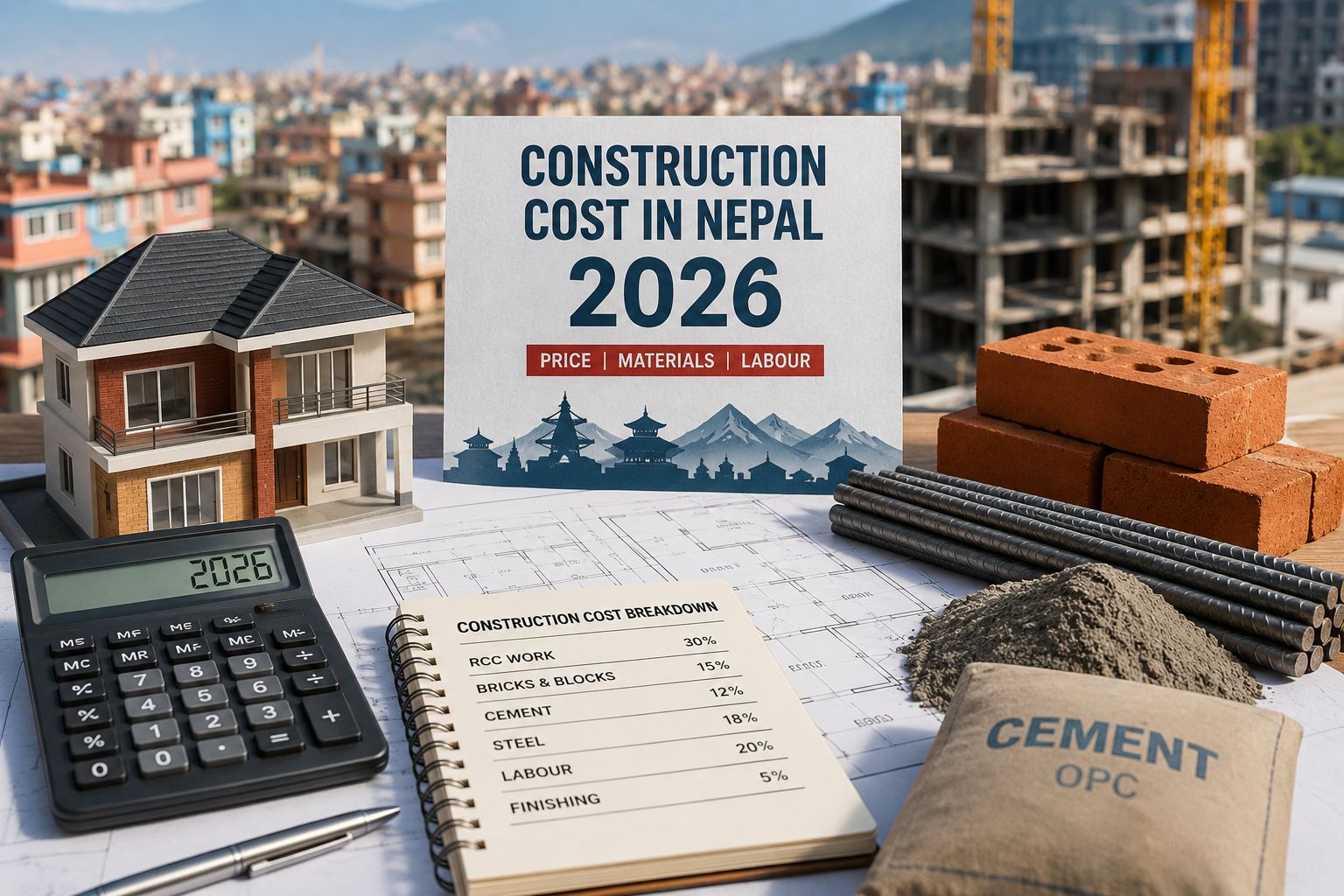
Construction cost in Nepal in 2026 ranges from NPR 2,800 to NPR 8,000 per square foot, depending on finish quality, location, and design complexity. Basic finishes cost NPR 2,800–3,700/sq ft, standard/mid-range finishes cost NPR 3,700–5,500/sq ft, and premium or luxury finishes run NPR 5,500–8,000+/sq ft. For a standard mid-range home of 1,200–2,000 sq ft in Kathmandu, Lalitpur, or Bhaktapur, the total cost typically ranges from NPR 45 lakhs to NPR 1.3 crore for a complete house, including the structure and finishes.
Per Sq Ft Construction Cost in Nepal (2026 Rates)
The construction cost per sq ft in Nepal falls into three broad tiers based on finish quality. These rates cover the built structure: foundation, columns, beams, slabs, brick walls, plastering, roofing, and basic electrical and plumbing.
| Finish Tier | Cost Per Sq Ft (NPR) | What's Included |
|---|---|---|
| Basic / Economy | 2,800 - 3,700 | Simple RCC frame, local tiles, standard cement finish, basic doors/windows |
| Standard / Mid-Range | 3,700 - 5,500 | Better brands, semi-modular kitchen, branded electrical & plumbing fittings |
| Premium / Luxury | 5,500 - 8,000+ | Imported tiles or marble, modular kitchen, false ceiling, designer fixtures |
What's Included vs Excluded in a Per-Sq-Ft Quote
A per-sq-ft construction cost quote almost never covers everything. It usually excludes land, the Naksha Pass (map approval) fee, soil testing, boundary walls, water boring, interior furniture, and landscaping. Ask your contractor exactly what's outside the quoted rate before you sign anything; the gap between "structure cost" and "move-in cost" commonly runs 15–25%.
Total Construction Cost by House Size (Sample Estimates)
Here's what house construction costs in Nepal look like once you apply those per-sq-ft rates to common built-up areas in the Kathmandu Valley.
| Built-Up Area | House Type | Estimated Total Cost (NPR) |
|---|---|---|
| 800-1,200 sq ft | Small/2BHK home | 28 lakh - 60 lakh |
| 1,000 sq ft house construction cost | 3-Aana single-storey home | 30 lakh - 55 lakh |
| 1,500 sq ft house | Standard family home | 55 lakh - 95 lakh |
| 2,000 sq ft house | 2-storey residential | 75 lakh - 1.2 crore |
| 2,500–3,000 sq ft house | 2.5-storey home | 90 lakh - 1.6 crore+ |
What Is the Total Cost of a 2.5-Storey House in Kathmandu Today?
A standard 2.5-storey house in Kathmandu with a total built-up area of 2,000–2,500 sq ft (ground floor, first floor, and a half-floor terrace/pooja room) typically costs between NPR 85 lakhs and NPR 1.4 crore for complete turnkey construction, structure plus finishing, at 2026 rates. The half-floor adds extra slab work, waterproofing, and staircase cost, which is why 2.5-storey homes run higher per sq ft than a plain 2-storey house of the same footprint.
RCC Rate Per Sq Ft With Material (Structural Cost)
The RCC rate per sq ft with material, meaning the grey structure alone (footing, columns, beams, and slab, inclusive of cement, steel, and labour), usually falls between NPR 1,800 and NPR 2,500 per sq ft in Kathmandu Valley. This is the single biggest line item in your budget, typically 28–32% of the total project cost, and it's why getting the RCC construction process right from footing to slab matters more for your final bill than almost any finishing choice.
What Is the Construction Rate Per Square Foot in Nepal in 2026?
For steel-structure building costs in Nepal, expect TMT rebar consumption of roughly 3.5–6 kg per sq ft of built-up area for a standard residential RCC frame. On a 2,000 sq ft house, that's approximately 7–9 metric tonnes of steel, which alone can account for NPR 8–10 lakhs of your budget at current rates. Building to Nepal's seismic code also directly affects this figure, an earthquake-resistant house built per NBC 105:2020 requires Fe 500D ductile steel throughout the frame, not the cheaper standard grade.
Construction Material Prices in Nepal 2026
Material costs make up 55–65% of your total construction budget, so construction material rates are worth tracking closely. Here's where things stand in 2026, based on the Department of Urban Development and Building Construction's (DUDBC) district-wise rate benchmarks and current Kathmandu Valley supplier quotes.
Cement Price in Nepal 2026
| Cement Type | Price Range (NPR per 50kg bag) |
|---|---|
| OPC (structural, columns/beams/slabs) | 700 - 1,050 |
| PPC (plastering, brickwork, masonry) | 600 - 850 |
OPC costs more but sets faster and gives higher early strength, which is why it's reserved for structural RCC work. PPC is the practical, cheaper choice for plastering and general masonry, and it handles moisture slightly better over time. Always check for the NS (Nepal Standard) mark from the Nepal Bureau of Standards and Metrology before buying, this matters more in a seismic zone than the brand name does.
TMT Steel / Rebar Price Per Kg
For rebar price in Nepal and iron price in Nepal, TMT Fe 500D bars, the ductile grade required for earthquake-resistant construction, run roughly NPR 88 to 120 per kg depending on brand and diameter.
| Brand | Approx. Price Per Kg (NPR) |
|---|---|
| Jagdamba Steel (Rhino 500D) | 90 - 105 |
| Laxmi Steel (Thermex) | 90 - 105 |
| Panchakanya TMT | 92 - 105 |
| Ambe TMT Fe 500D | 95 - 108 |
Steel prices move with global billet markets and import duty changes, so treat any figure as a snapshot; get a fresh quote from your local stockist before finalizing a budget, since Jagdamba steel price and Laxmi steel price both fluctuate month to month. Never substitute Fe 500D with a lower grade to save money on this line item; it's the one place where cost-cutting adds real seismic risk.
Brick, Sand & Aggregate Prices
Brick price in Nepal 2026:
| Brick Type | Price Per Unit (NPR) |
|---|---|
| Class A Brick (Kathmandu Valley) | 16 - 22 |
| Terai Brick | 13 - 17 |
| Fly ash bricks price in Nepal | 12 - 18 (15–20% cheaper than clay) |
| Hollow Concrete Block | 35 - 50 |
Sand price in Nepal:
| Sand Type | Price |
|---|---|
| River sand | NPR 3,750 - 4,500 per cubic meter |
| Crushed stone sand (washing sand) | NPR 9,500 - 11,000 per tipper |
| 1 tipper sand price in Nepal (pit sand, for backfill) | NPR 25,000 - 28,000 |
Aggregate price in Nepal (20mm, standard for RCC): NPR 3,180-4,500 per cubic meter, with Melamchi-sourced stone chips generally cheapest around Kathmandu and Dhading, or Bhakunde running higher due to transport distance.
Is It Cheaper to Use Bricks or Blocks for Construction in Nepal?
Traditional bricks cost less per individual unit, but hollow concrete blocks cover more wall area per piece, lay faster, and offer better thermal insulation, so on a large wall area, blocks can work out cheaper per square meter even though the per-unit price looks higher. Specifically for non-load-bearing walls, fly ash bricks are the middle ground: 15–20% cheaper than clay bricks with comparable strength. This brickwork and masonry stage is usually quoted and scheduled as a separate structural and masonry work phase, distinct from finishing.
Plaster & Finishing Rates in Nepal
Plaster rate per sq ft in Nepal is an important cost to consider when budgeting for a house. Internal 12mm plastering typically runs NPR 200–260 per sq m, while external weather plastering with waterproofing (15mm) costs NPR 240–320 per sq m. External plastering costs more because it needs to withstand Kathmandu's monsoon moisture.
Which Flooring Is Most Cost-Effective for Nepali Homes?
Standard 600×600mm vitrified tiles are the most cost-effective flooring for most Nepali homes, priced around NPR 180–350 per sq ft laid, offering a good balance of durability and look without the premium of imported stone. Rates vary by pattern and installation complexity too, our breakdown of tile installation cost in Nepal covers floor and wall rates by material in more detail.
Price of Granite Per Square Foot in Nepal
Granite flooring costs noticeably more than vitrified tiles, generally falling in a premium bracket similar to marble, it's typically reserved for premium or luxury-tier finishing packages rather than standard builds, given the material and skilled fitting cost involved.
Cost of UPVC Windows Per Square Foot in Nepal
UPVC windows generally cost more upfront than standard aluminum sliding windows but offer better sound and thermal insulation, useful along busy Kathmandu roads. Doors and windows as a category (UPVC, aluminum, or seasoned wood) typically run NPR 650–1,800 per sq ft of opening, depending on material grade, and the exact rate depends heavily on how the window frames are fabricated, factory-made versus site-fabricated frames price out differently.
Labour Cost for House Construction in Nepal 2026
Labour typically accounts for 25–35% of your total house construction budget.
| Worker Category | Kathmandu Valley (NPR/day) | Outside Valley (NPR/day) |
|---|---|---|
| Head Mason / Rajmistri | 1,500 - 2,000 | 1,200 - 1,600 |
| Carpenter (skilled) | 1,200 - 1,800 | 1,000 - 1,500 |
| Bar bender / Steel fixer | 1,200 - 1,600 | 1,000 - 1,400 |
| Electrician / Plumber | 1,200 - 1,800 | 1,000 - 1,500 |
| Unskilled helper | 800 - 1,200 | 700 - 1,000 |
Daily Wage for Skilled vs Unskilled Construction Labour in Nepal
Skilled trades (masons, carpenters, electricians) earn roughly 40–60% more per day than unskilled helpers in Kathmandu Valley. Wages also swing seasonally, labour is typically 10–20% cheaper from June to September and peaks during the main dry building season, October through April.
Plumbing and Electrical Labour Charges in Nepal
Plumbing and electrical work is usually priced either per room (NPR 1,500-1,800 for basic plumbing per room, NPR 1,800 for basic wiring per room) or as a lump-sum package for the whole house, which commonly runs NPR 3.5–8.5 lakhs combined for a mid-size home depending on fixture quality.
How Much Do Painters Charge Per Square Foot in Nepal?
Painting (primer plus two coats of putty and emulsion or weathercoat) typically costs NPR 45–90 per sq ft of wall surface area, with exterior weathercoat finishes at the higher end due to added weather resistance.
Permits, Design & Hidden Costs
Before construction begins, several costs sit outside the core per-sq-ft construction rate. Permits, architectural and structural design, taxes, and other project-related charges can add significantly to your total budget, so it's important to account for them from the start.
How Much Does Map Sanction (Naksha Pass) Cost in Nepal?
Municipal map approval, the Naksha Pass, generally costs between NPR 40,000 and NPR 1.5 lakh depending on your municipality, plot size, and built-up area, though larger projects in Kathmandu Metropolitan City can run higher. You cannot legally begin construction without it, and it requires approved architectural drawings, your land ownership certificate (Lalpurja), a soil test report, and structural drawings compliant with NBC 105:2020. The full building permit and map pass process in Nepal walks through each document and approval stage step by step.
How Much Do Architects Charge for House Design in Nepal?
Architectural design and 3D visualization typically cost NPR 15–35 per sq ft of built-up area, with structural engineering and analysis adding another NPR 10–20 per sq ft. For a 2,000 sq ft house, that's roughly NPR 50,000–1.1 lakh in combined design fees before construction even starts; this is usually billed as part of a structural engineering service, separate from the construction contract itself.
What Are the Hidden Taxes When Building a House in Nepal?
Beyond the Naksha Pass fee itself, budget for the municipal revenue tax built into the permit charge, a 10% tax currently applied to non-eco bricks (with a rebate available for certified fly ash producers), and the standard 13% VAT on ex-factory material rates, which many contractor quotes exclude by default.
How to Calculate Your House Construction Cost in Nepal
The quickest way to estimate your budget: Total Cost = Built-up Area (sq ft) × Rate per sq ft (NPR) for your chosen finish tier. A 1,500 sq ft house at a standard rate of NPR 4,500/sq ft comes to roughly NPR 67.5 lakhs.
This per-sq-ft method is fine for early planning, but it's not accurate enough to compare contractors. For that, you need a Bill of Quantities (BOQ), an item-by-item breakdown of quantities and unit rates for everything from excavation to paint. Never sign a contract based on a single lump-sum number; insist on a BOQ so you can send the same document to two or three contractors and compare like for like. It's also worth checking how your numbers stack up against quotes from established construction companies in Nepal before you commit.
How to Build a Small House in Nepal on a 50 Lakh Budget
A realistic 50 lakh budget in Kathmandu Valley typically buys a basic-to-standard finish single-storey home of roughly 1,000–1,300 sq ft, or a 2-room house of 600–700 sq ft with a better finish level. A few things stretch that budget further:
Keep the floor plan rectangular: Every corner, curve, or balcony projection adds shuttering, labour, and wasted material, a clean rectangular plan uses 10–15% less material for the same usable area.
Buy cement and steel in bulk directly from an authorised stockist rather than retail, and lock in the rate before prices move.
Time sand and brick purchases for February–April, when demand drops before the monsoon and prices run 8–12% lower than during the pre-monsoon rush.
Keep kitchen and finishing choices modest at first: A basic layout now with a modular kitchen upgrade later, once cash flow allows, is far cheaper than trying to fit premium cabinetry into a tight structural budget.
Build in stages: Complete the structure and one floor first, move in, and finish the rest as funds allow, which is a normal and sensible approach for Nepali families managing a large spend. This works especially well if you're already planning a building extension once your budget allows for a second floor.
Never sign without a BOQ, even on a tight budget, it's the only way to know a low quote isn't hiding cut corners in steel grade or cement type.
Turning This Estimate Into an Actual Budget
The construction cost estimates in this guide are useful for planning, but your actual house construction cost will depend on factors such as soil conditions, plot access, floor count, structural requirements, material prices, labour rates, and your choice of finishes. Treat the per-sq-ft rates as a starting point rather than a final quotation.
Before you commit to a contractor, ask for a detailed Bill of Quantities (BOQ) that clearly lists materials, quantities, labour, and unit rates. A BOQ gives you a much more reliable picture of your total budget and makes it easier to compare contractor quotations without overlooking hidden costs.
If you're ready to turn your estimated budget into a site-specific construction plan in Kathmandu, Lalitpur, or Bhaktapur, get a free consultation and site-specific estimate from our team. You can also talk to a verified engineer or contractor to assess your site and prepare a BOQ tailored to your project requirements.
Frequently asked questions
Community
Likes and comments
Like the post if it helped you, and leave a comment to share your experience. Every comment is reviewed by our admin team before it appears publicly.
Want to join the conversation?
Sign in to leave a comment. Every comment is reviewed by our admin team before it becomes public.
Log in to commentApproved comments
Showing the latest approved conversation for this post.
No approved comments yet
Be the first to start a conversation once your comment is approved.